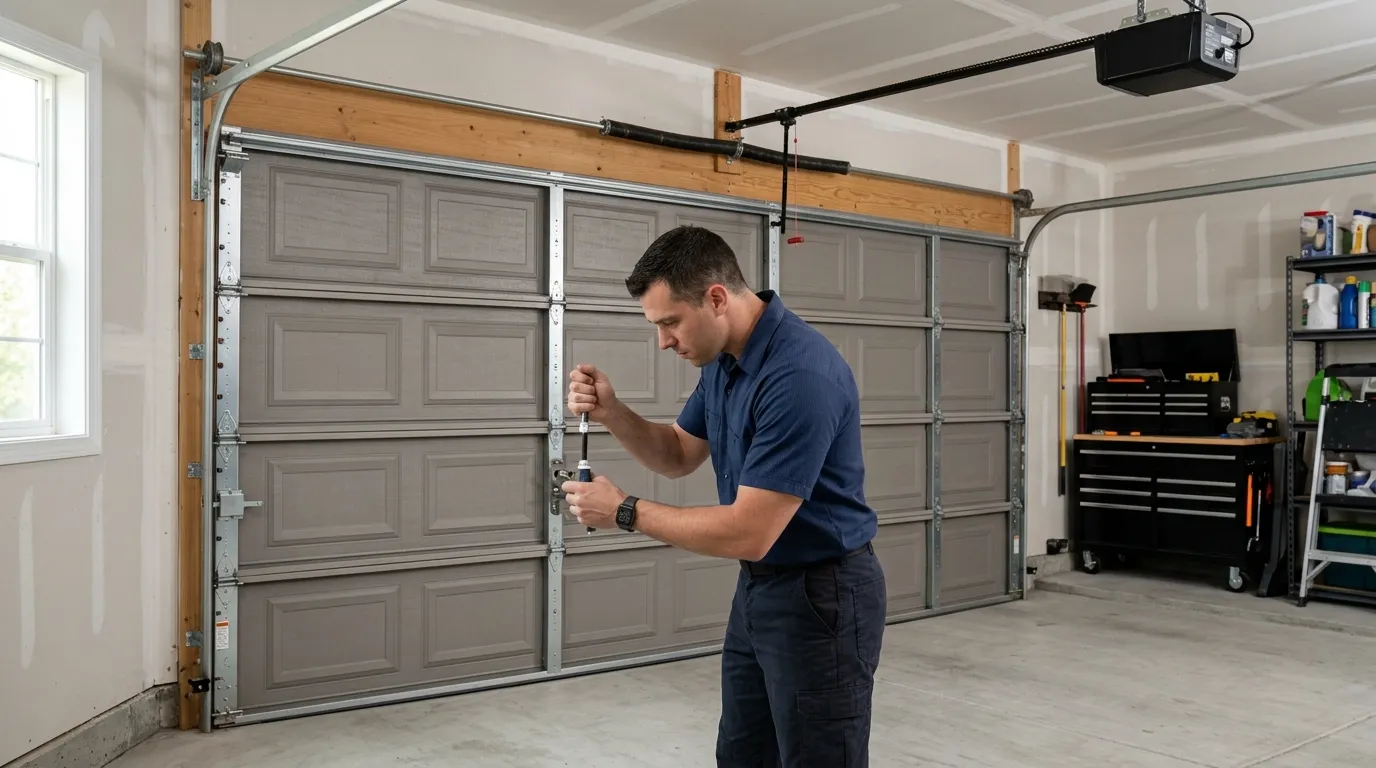
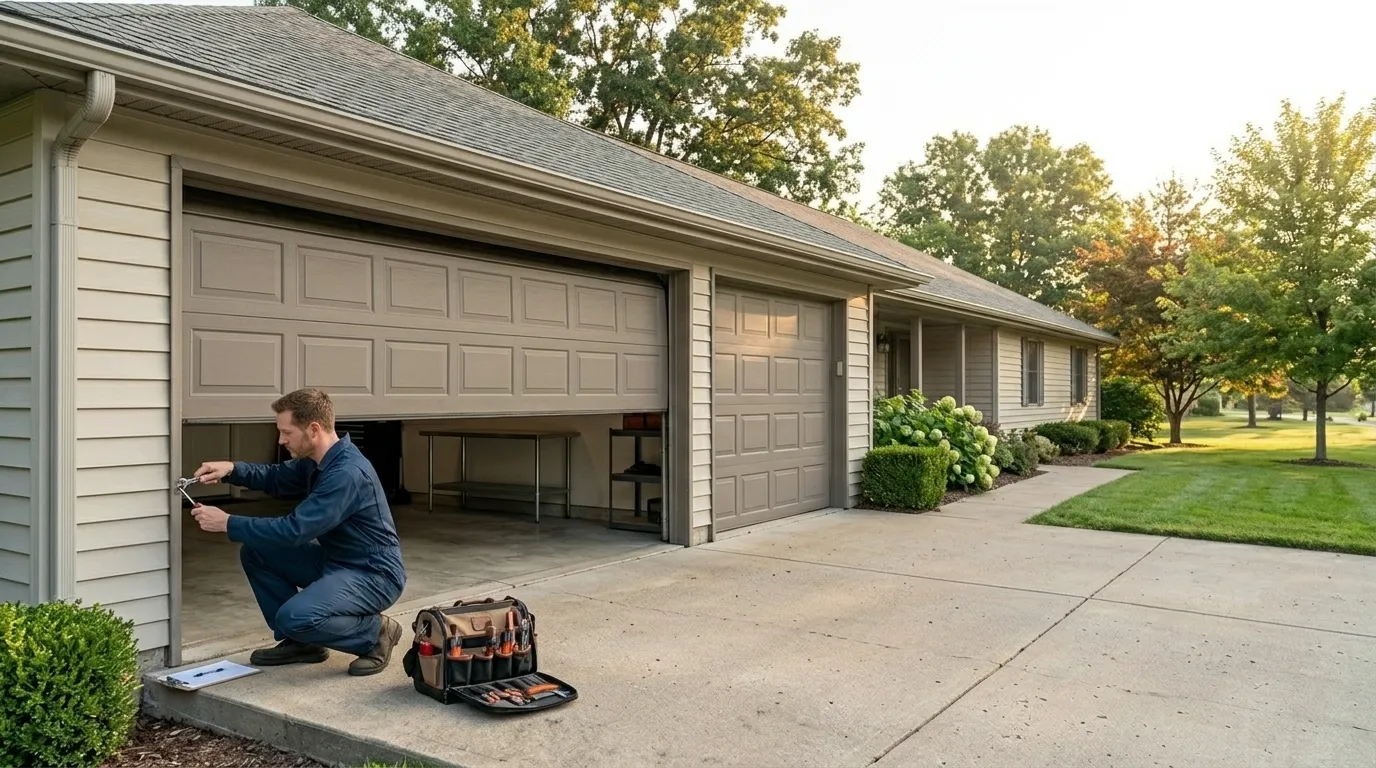
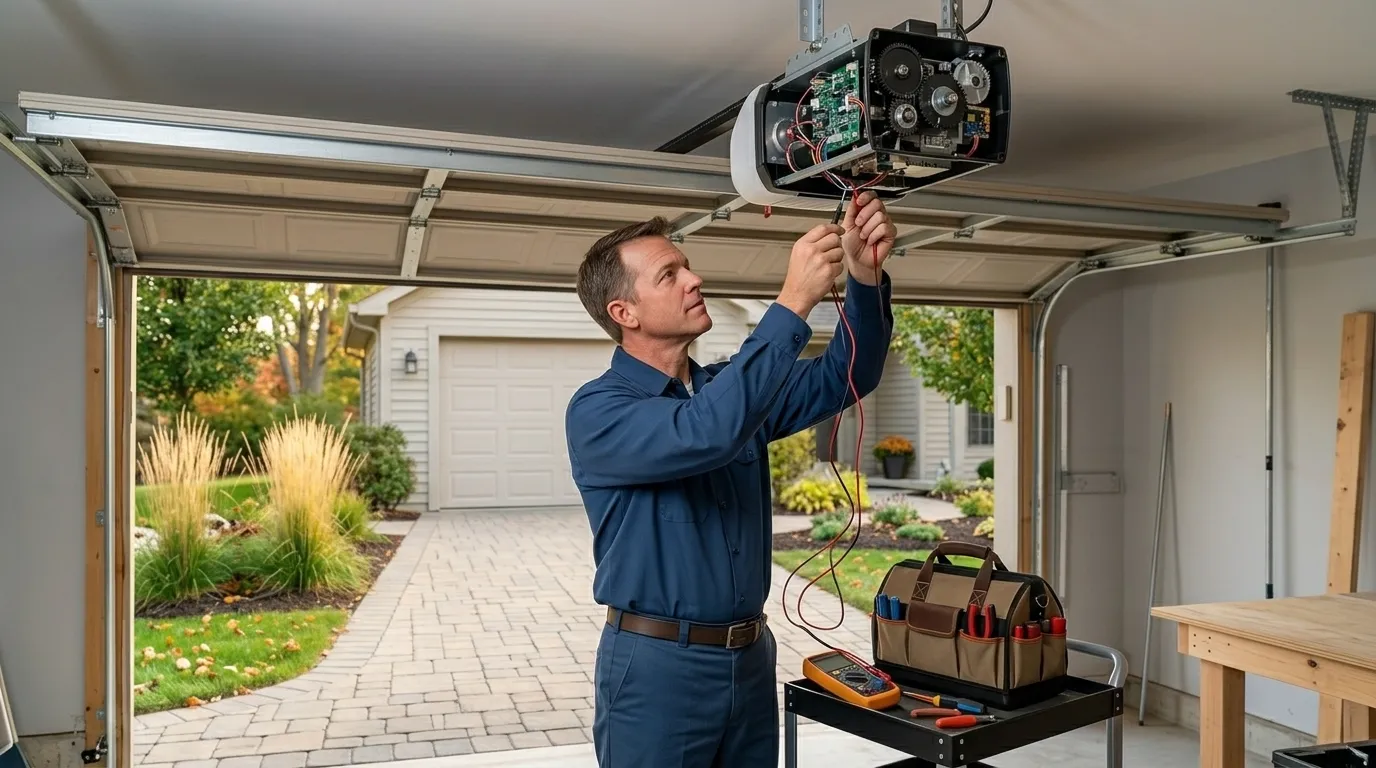
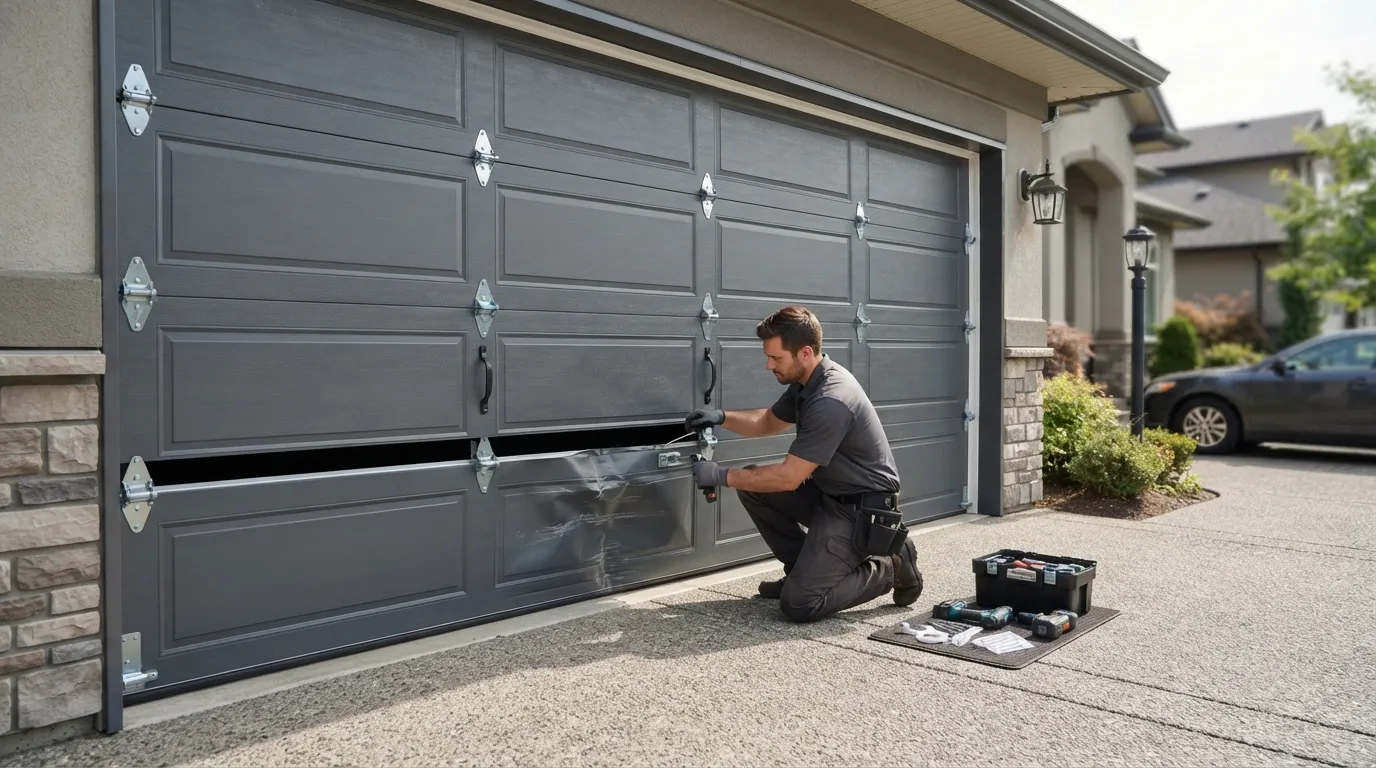
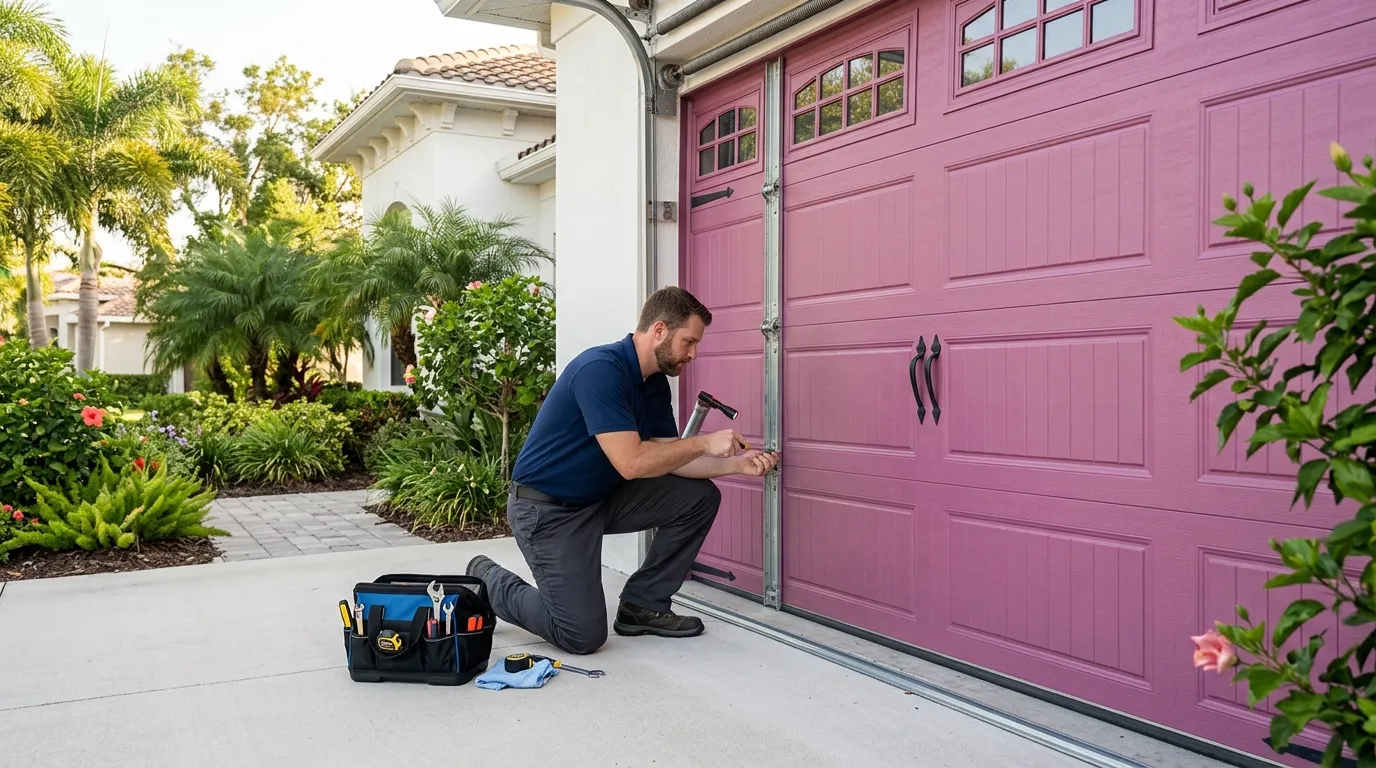
Argentine's median year built is 1988, noticeably newer than the 1976 median across the rest of our service area. That gap matters more than it sounds like it should. Doors and openers installed in the late 80s through the mid-90s were built to a different set of standards - thinner steel panels in some cases, but also torsion spring systems that replaced the older extension-spring setups almost everywhere out here. That's mostly good news: torsion systems are safer and hold up better, and parts for them are still in normal supply, unlike the side-mounted extension hardware you find on older doors closer to Fenton. What it does mean is that when something fails here, it's usually wear rather than obsolescence - a spring at the end of its cycle count, worn rollers, a sensor that's drifted out of alignment. Cold winters do their part too; F3's severe cold band means steel contracts, lubricant thickens, and openers strain harder on the first really cold mornings, which is when we get most of our late-fall and January calls.