Fenton, MI

Installing a New Garage Door Opener in Fenton, MI

Professional garage door opener installation for Fenton, MI homes built 1950-1994, with cold-climate wiring and mounting done right for older garages.

Installing a New Garage Door Opener in Fenton, MI in Fenton
Serving Fenton, MIBackground-checked techsHonest, upfront pricingFast local response
1950–1994
Typical build years of local homes
Cold winters
Climate that shapes door wear
22K
Owner-occupied homes in the area
21
Named areas in our coverage

Symptoms

The Symptom

The opener hums but the door doesn't move. Or it moves an inch, stutters, and reverses. Some owners call because the chain has jumped the sprocket and hangs loose inside the rail.

Remote range sensor issues

Others notice the remote works from the driveway but not from the street, or the wall button does nothing until they jiggle the wire. A lot of these calls come in during the first hard cold snap of the year, when a motor that's been limping along all fall finally quits pulling the load.

Spontaneous opening logic failure

Some owners tell us the door has started opening a few inches on its own overnight, which is usually a worn gear or a failing logic board losing track of the limit settings, not anything mechanical with the door itself.

Original opener end-of-life

By the time most people call, they've already tried the obvious fixes: new batteries in the remote, re-programming the keypad, spraying the chain with whatever's in the garage. If the opener is original to the house, none of that buys much time. The unit itself is at the end of its run.

Local causes

Why It Happens Here

Most of the houses this business serves went up between 1950 and 1994, with the median close to 1976, and the bulk of that stock across the area's 21 named neighborhoods dates to the 1960s and '70s. Openers installed with those garages, or swapped in once during the '80s or '90s, are past any reasonable service life. Gears made of the plastic composite common in that era get brittle. Capacitors dry out. Circuit boards that were fine for twenty years start losing their programming in the cold.

That cold matters more here than in a milder climate. This area sits in a severe cold band, and an unheated attached garage swings through a much wider temperature range than the living space next to it. Motors built for that era weren't engineered with today's cold-start tolerances, and the grease in old gear housings stiffens up hard enough to strain a worn motor past its limit. A newer opener with a modern drive and sealed gearing handles that swing without complaint. A 1970s chain-drive unit does not.

With 22,060 owner-occupied houses in the service area, a lot of them are running exactly this combination: an old motor, an unheated garage, and a Michigan winter.

Why It Happens Here

Timing

How Long It Takes

We're not going to quote you a install time before we've seen the garage, because the honest answer depends on what's already there. A straightforward swap onto existing brackets and wiring, on a door that's otherwise in good shape, is a different job from one where the rail has to be re-hung, the wiring run to a new outlet, or the door itself re-balanced because the springs have been fighting a dying opener for months.

Historic garage wiring limitations

Houses in the older part of the housing stock here sometimes have garage wiring that predates a dedicated opener circuit, which adds time nobody can estimate over the phone.

Compensating spring cable wear

Same with doors that have been operating on a failing opener for a while - if the springs or cables have been compensating, that gets sorted before the new unit goes in, not after.

Whole setup assessment needed

What we can tell you is that we look at the whole setup before we quote anything, not just the opener box. A number given sight-unseen isn't a real number.

The repair

What the Fix Involves

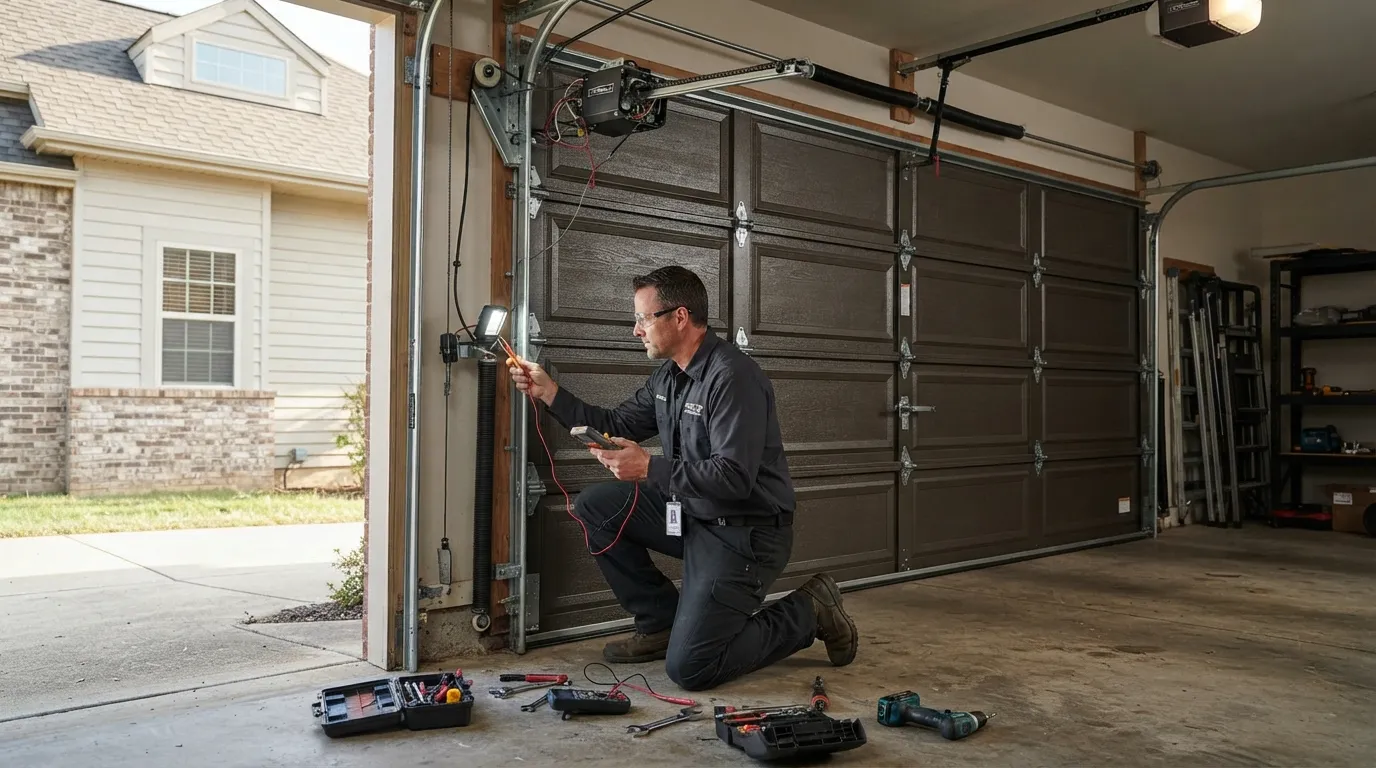
Installation starts with pulling the old unit down and checking what it's leaving behind - rail condition, header bracket, the wiring feeding it. On houses from the 1960s and '70s stock common in this area, that wiring is often original, and a modern opener draws differently than the motor it's replacing, so the circuit gets checked, not assumed.

  1. Rail squaring bracket mounting

    Mounting the new opener means squaring the rail to the door, setting the header bracket into solid framing (not just drywall, which is a common shortcut on older garages), and running the safety sensors low enough and aligned well enough to actually trip.

  2. Cold sensor alignment drift

    In a cold-severe climate, sensor alignment matters more than people think - a bracket that's shifted even slightly can throw the beam off in a way that only shows up when the garage temperature drops. Last comes calibration: travel limits, force settings, and battery backup where the door needs to open during a power outage.

  3. Reversal safety testing mandatory

    We test the reversal safety every time, not as an afterthought. One limitation worth saying plainly: if the door itself is sagging or the springs are shot, we'll say so before we hang a new opener on a door that isn't ready for it.

Questions

Common questions

Can I install a new garage door opener myself in an older Fenton garage?

You can, but houses from this area's 1960s-70s stock often have wiring or framing that doesn't match what a new opener kit expects - no dedicated circuit, a header that's drywall instead of solid framing, or a door that's been out of balance for years. Any of those turns a weekend project into a bigger job than the box suggests.

Will a new opener handle the cold better than my old one?

Generally yes. This area sits in a severe cold climate band, and older motors and gearing weren't built with today's cold-start tolerances. A modern opener with sealed gearing and a motor rated for wide temperature swings holds up better through winter than a decades-old unit in the same unheated garage.

Do you replace the opener without checking the door itself?

No. If the springs, cables, or rollers are worn enough that they've been straining against a failing opener, we point that out before installing anything new. Putting a new motor on a door that's mechanically unsound just moves the failure point, it doesn't fix it.

How do I know if it's the opener or the door that's failing?

If the door moves freely by hand when disconnected from the opener but the motor struggles or reverses on its own, it's usually the opener - worn gears, a failing board, or sensor misalignment. If the door itself is heavy or uneven to lift by hand, the problem is mechanical and needs addressing first.

Ready when you are

Need a garage door sorted in Fenton?

Fenton Garage Door Pros repairs and installs garage doors, springs and openers in Fenton, MI and the surrounding area.

CallGet a quote