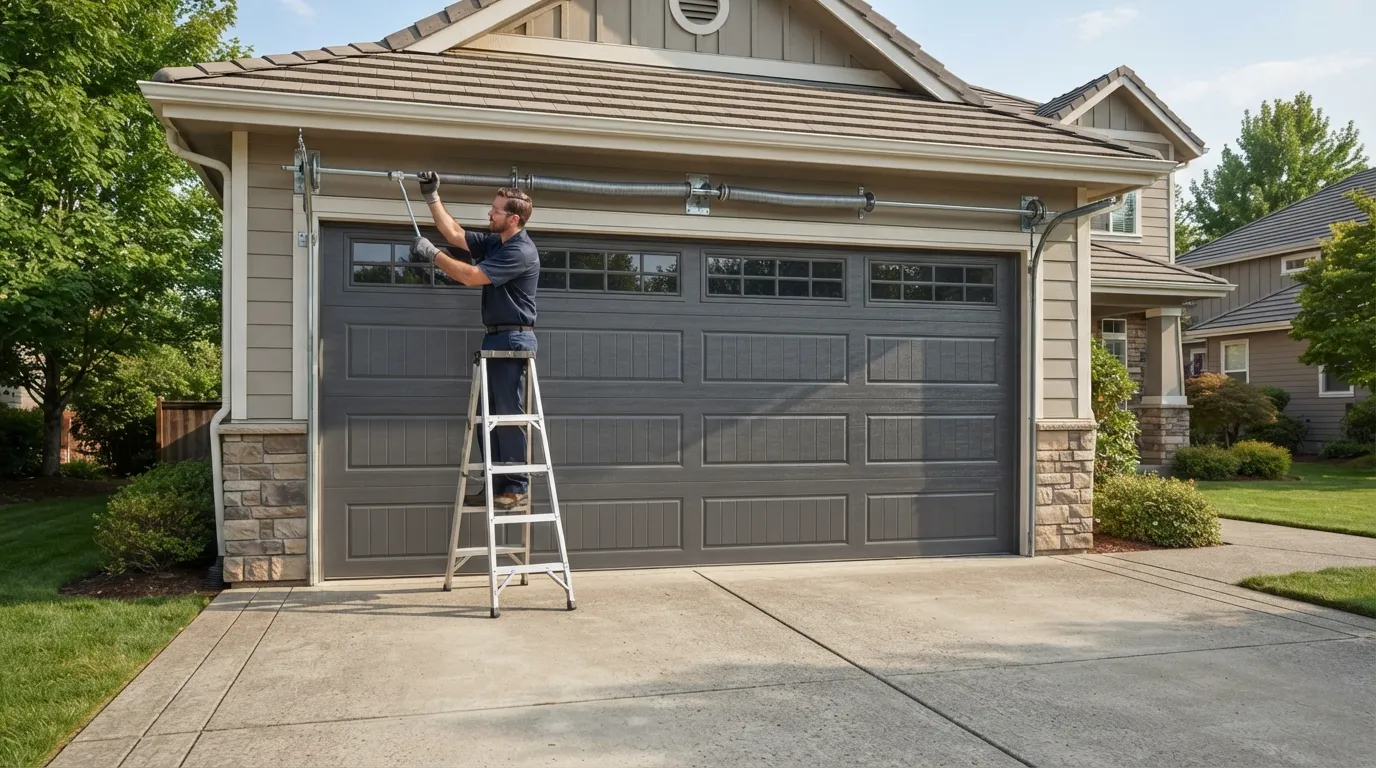
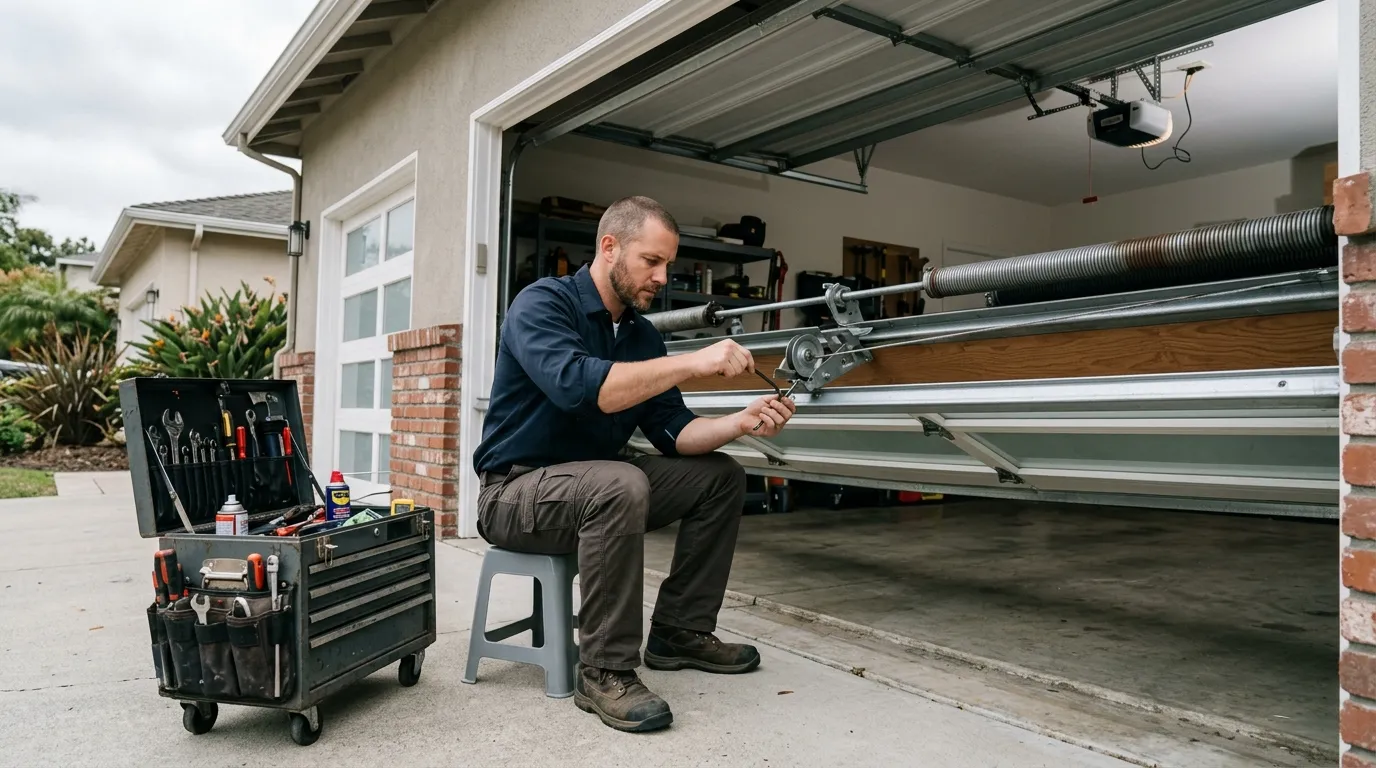
Fenton sits in a climate band the federal data classes as severe cold, which means steel garage door sections and torsion springs go through a real seasonal swing every year - not a mild one. Cold steel is stiffer and less forgiving, lubricant on tracks and hinges thickens up, and a spring that's already carrying years of cycling loses tension faster once the temperature drops. That's the mechanical reason winter is when most commercial doors here finally quit.
The building stock adds to it. A lot of the detached garages, outbuildings, and small shop structures scattered through Fenton's neighborhoods went up somewhere between 1950 and 1994, with the median landing around 1976. Many of those structures were built as houses went up around them and later pressed into service as work space or storage for a small business, doors and all. That means the hardware inside is often original or close to it - spring sizing and track gauges chosen for occasional residential use, not for a door that cycles a dozen times a day for a shop.
Put cold steel and forty-plus-year-old spring sizing together, and the failure shows up sooner than it would on newer commercial hardware built to a heavier duty cycle.