
Spring parameter measurement
We measure the wire, the wind, and the drum size off the old spring rather than guessing, because a mismatched spring either won't lift the door evenly or will wear out the opener trying to compensate.
Linden, Fenton
Garage door repair for Linden homes built mostly in the early 1990s. Fenton Garage Door Pros covers the 4-mile run from Fenton for spring, opener and track calls.
Booking
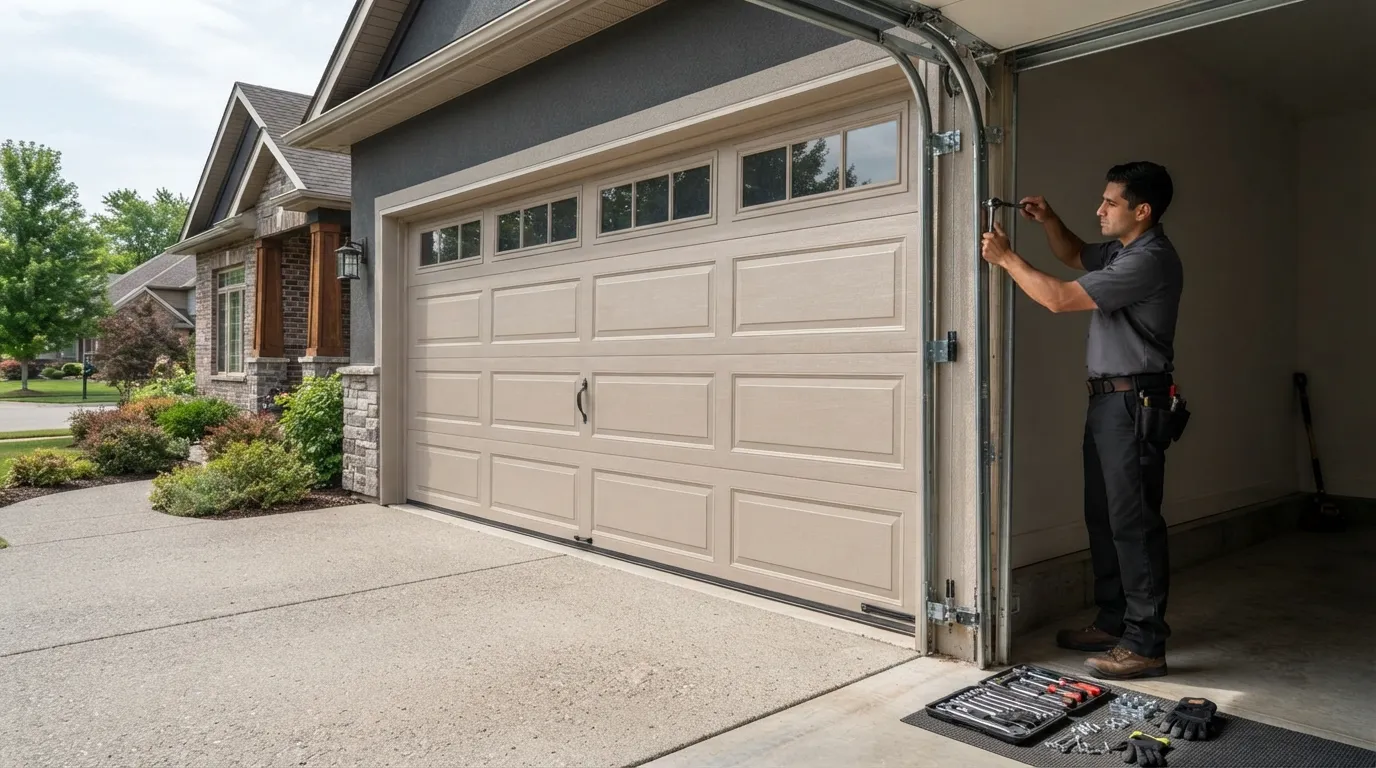
We run the call from Fenton, about 4 miles out, so getting to a Linden address doesn't add much to the day. When you call, tell us the door's age if you know it - most Linden garages went up around 1991, which is newer stock than a lot of what we see closer to Fenton, and it changes what we expect to find under the hood. We ask because a torsion spring from a 1991 build is a different part number than one from a 1976 build, and knowing which one we're driving out for means we're more likely to have the right spring on the truck the first trip instead of a second one.
We don't keep a branch in Linden. Every job here is a dispatch from Fenton, so we're not going to promise a same-hour window just because it's a short drive - we'll give you a real estimate when you call, not a marketing number.
The repair
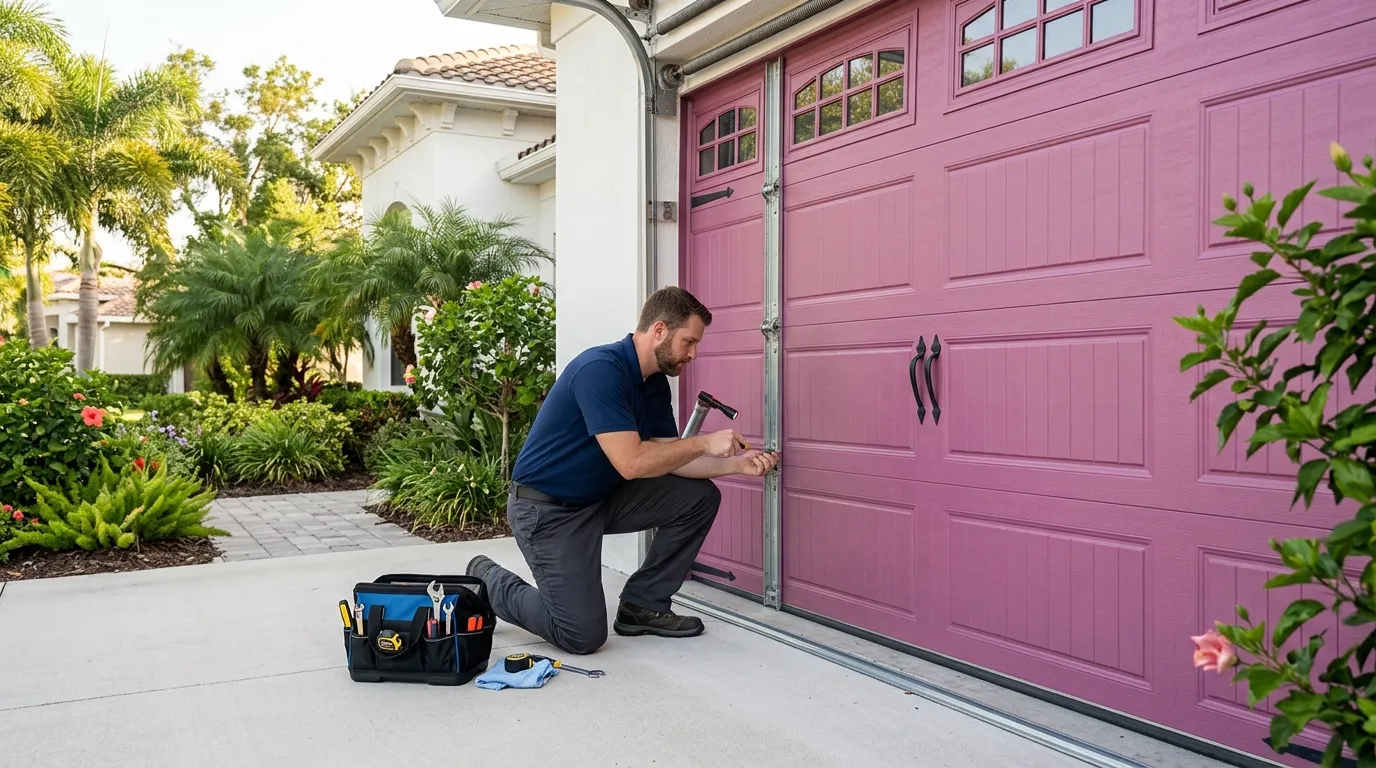
On a door original to a 1991 build, the most common failure we open up is the torsion spring - galvanized wire from that era holds up reasonably well but still fatigues out around 10,000 to 15,000 cycles, and a door that age has usually put a lot of miles on the same coil.
We measure the wire, the wind, and the drum size off the old spring rather than guessing, because a mismatched spring either won't lift the door evenly or will wear out the opener trying to compensate.
The other original part we find intact more often than not is the track - steel roller track from that period is solid stuff, and unless someone backed a car into it, it's usually the rollers riding in it that are shot, not the rail itself. We replace what's actually failed and leave what's still doing its job, which keeps the bill down and the door running the way it was built to.
Local causes
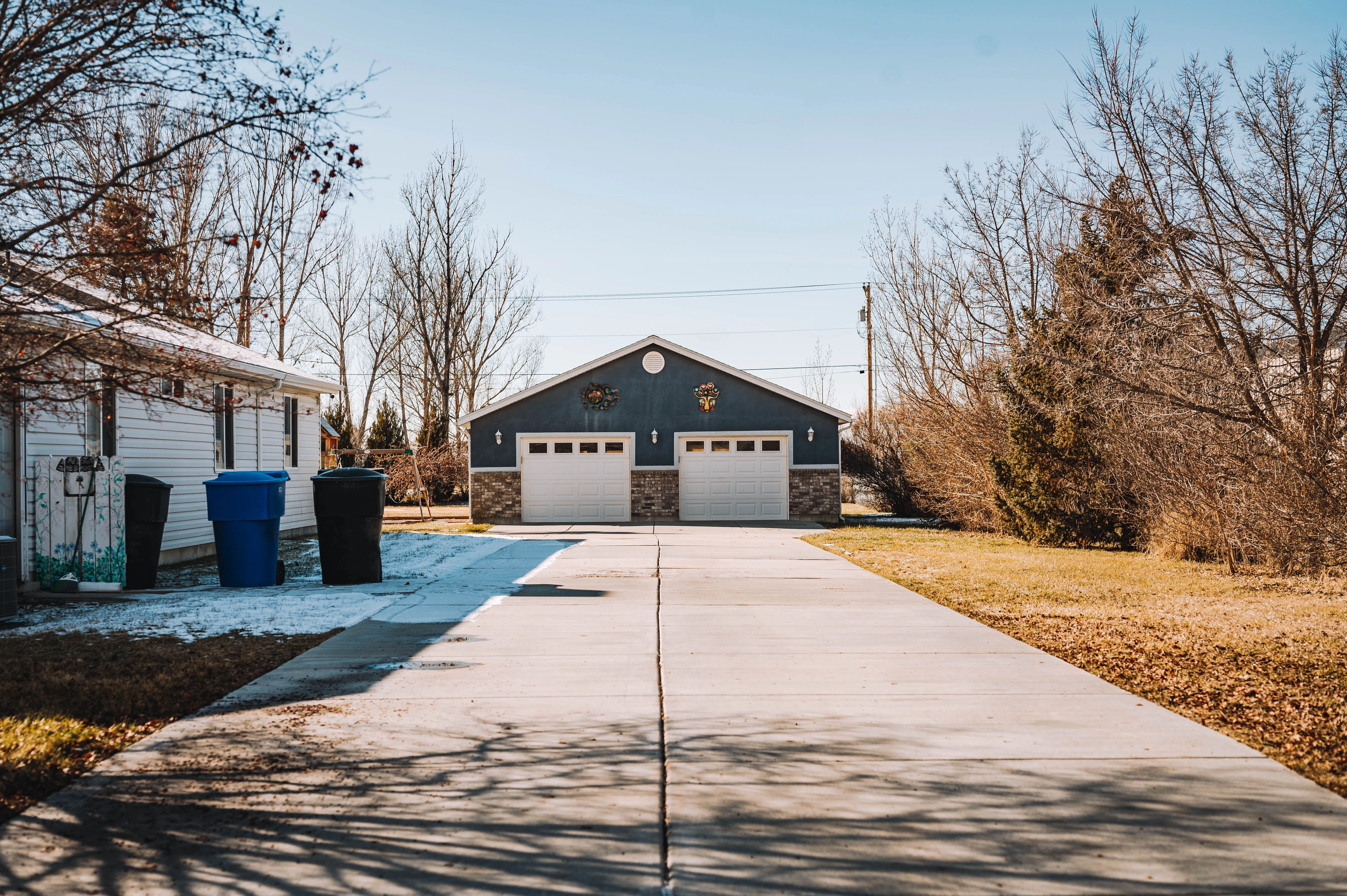
Linden's housing stock sits later than the broader Fenton-area range - most of the service territory was built between 1950 and 1994, with a lot of it concentrated in the 1960s and 70s, but Linden's median build year lands around 1991. That matters for hardware: doors from the early 90s were more likely to ship with a factory opener and a torsion spring setup rather than the older extension-spring, side-mounted systems still common on older houses nearby. So the failure pattern here skews toward spring fatigue and opener drivetrain wear rather than the seized side hardware we see on older stock.
Winters here are the same cold-climate load on every door in the area regardless of build year - the region sits in a severe cold band, and a door that cycles through freeze-thaw swings all season puts extra strain on springs and rollers no matter when the garage was framed.
DIY or pro
Replacing a torsion spring yourself is not a weekend project, and we'll say that plainly: the spring is under enough tension to break a wrist or worse if the winding bar slips.
Adjusting opener travel limits or swapping a roller is a different story - reasonable for a handy homeowner with the manual in hand. Where we tell people to stop and call is anything involving the spring, the cable, or the bottom bracket.
If your door is still running its original 1991-era spring and it's started making a popping or grinding sound on the way up, that's fatigue talking, and it's close to the end of its cycle life either way.
Symptoms
The call we get most from Linden is a door that groans or hesitates on the way up, then either stalls halfway or slams down fast on the way closed. That's almost always a spring that's lost tension, not the opener - the motor's still trying to do a job the spring used to help with, and it's losing.
A close second is a door that reverses right after the floor without any obstruction in the way. On a 1991-era setup that's often the down-limit switch or a worn roller catching in the track, not a safety sensor issue, though we check the sensors anyway since a bad one will do the same thing.
Timing
A straightforward torsion spring swap on a single door usually runs under two hours once we're on site, including the drive from Fenton. Roller and track cleanup adds less time than that. What slows a job down is parts we don't carry standard - some opener drivetrain kits and specific bracket hardware have to be ordered, and if that's the case we'll tell you up front rather than have you wait around guessing.
Questions
No. We run out of Fenton, about 4 miles away, and dispatch to Linden as needed. It's a short drive, but we don't want to promise a Linden-based response time we can't back up - we'll give you a straight estimate when you call.
Often, yes. A torsion spring from that era typically lasts 10,000 to 15,000 cycles, and a door that age has usually put enough miles on it to be near the end of that life. If it's groaning or hesitating, that's a sign it's close.
For most 1991-era doors, a spring or roller repair is the right call - the panels and track from that period are usually still solid. We'd only talk full replacement if the door itself is damaged or the track's been bent badly enough that alignment is a lost cause.
Explore more
Ready when you are
Fenton Garage Door Pros repairs and installs garage doors, springs and openers in Fenton, MI and the surrounding area.