
Steel sectional setup standard
A door built in that window is almost always a steel sectional, either a single 8-by-7 or a double 16-by-7, hung on torsion hardware rather than the older extension-spring setups you'd find in a house from the 1960s.
Holly, Fenton
Garage door repair and installation for Holly, MI homeowners, covered from Fenton. Torsion springs, openers, and steel doors typical of 1981-era homes.
Symptoms
Most houses in Holly went up around 1981, about five years newer than the median across our whole service area. That matters more than it sounds like it should.
A door built in that window is almost always a steel sectional, either a single 8-by-7 or a double 16-by-7, hung on torsion hardware rather than the older extension-spring setups you'd find in a house from the 1960s.
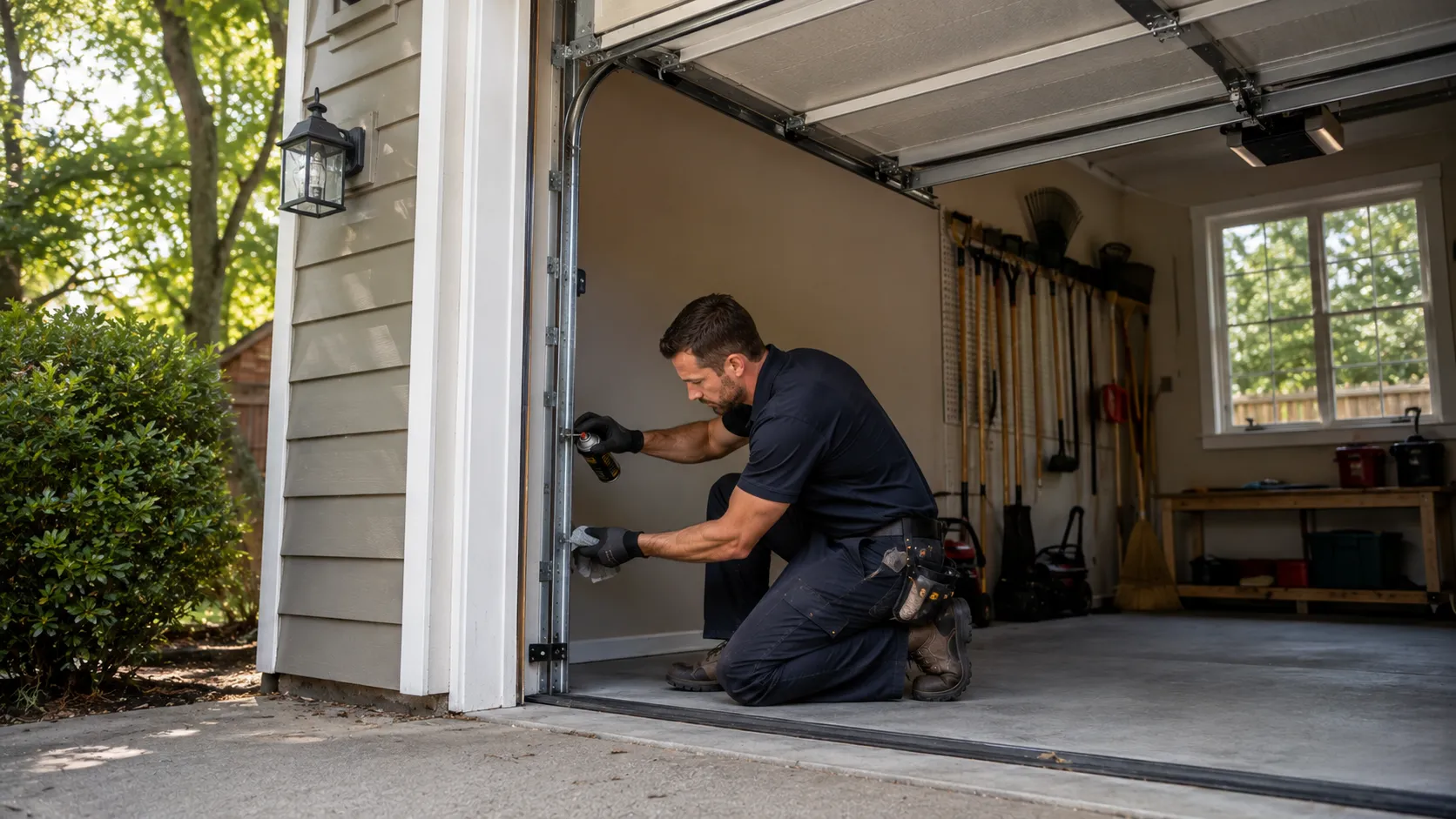
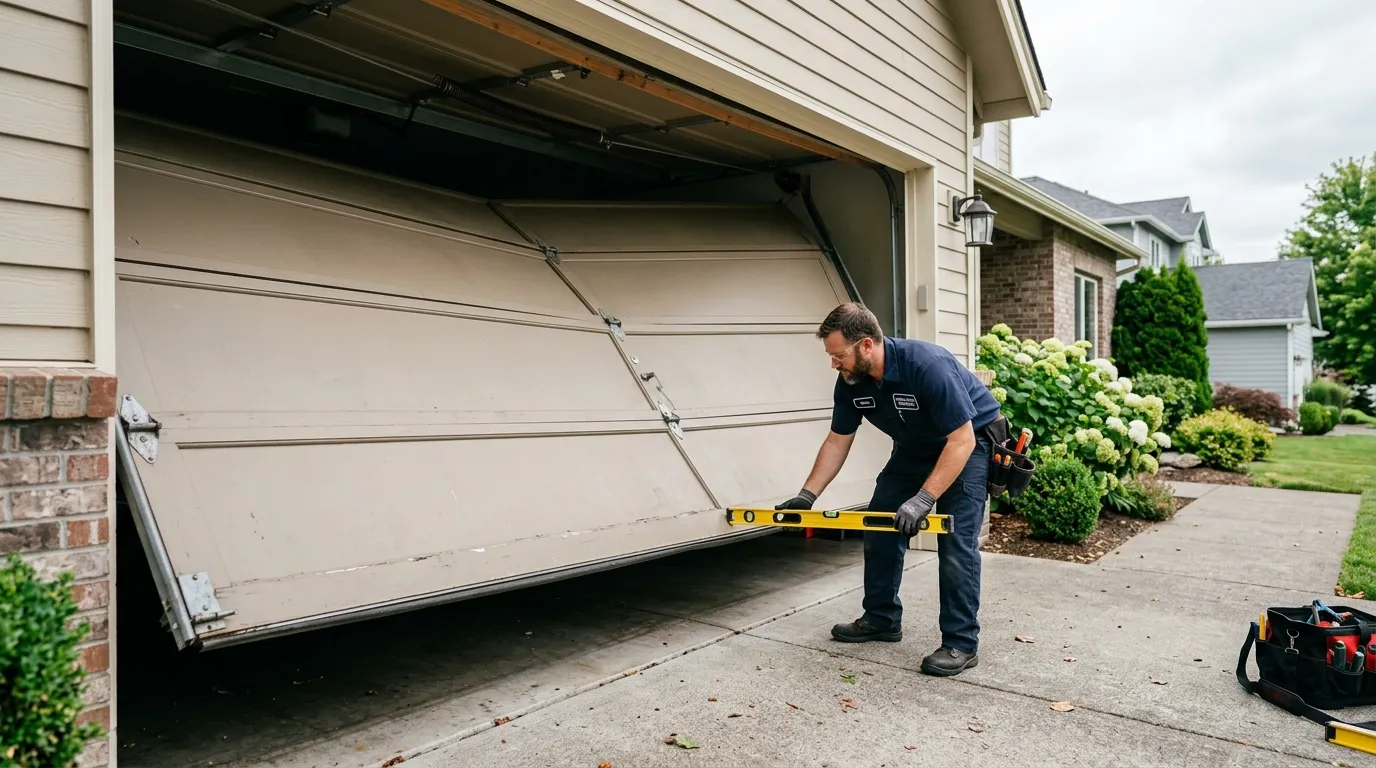
When something goes wrong, it shows up as a door that won't lift past waist height, a loud bang from the spring side when you open it, or an opener that runs but the door barely moves. On a 1981-era door, that's almost never the opener's fault first - it's the spring losing tension after four decades of cold cycling, or a cable starting to fray where it wraps the drum.
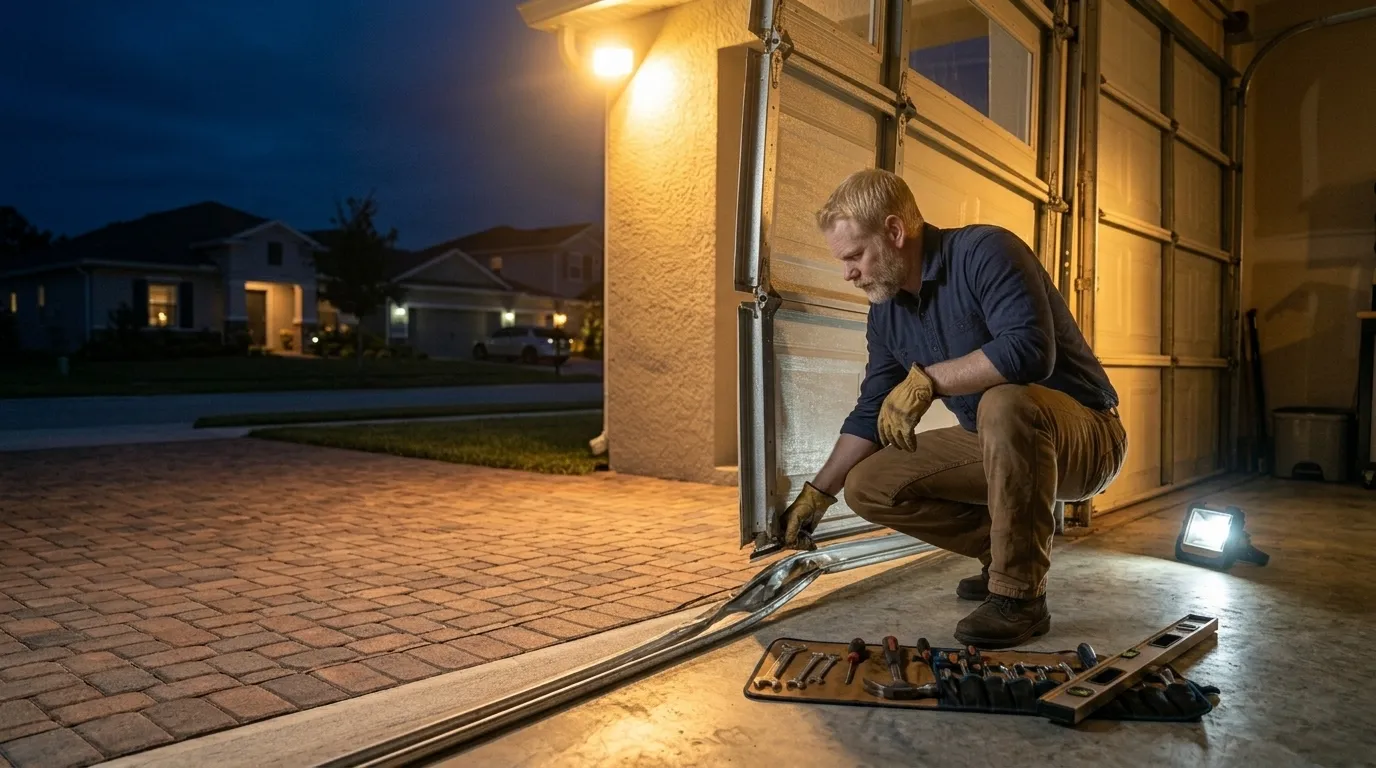
The panels themselves, thin galvanized steel with little to no foam backing, tend to dent before they crack, so a jammed door is more often a bent track or a popped roller than structural failure in the panel.
Timing
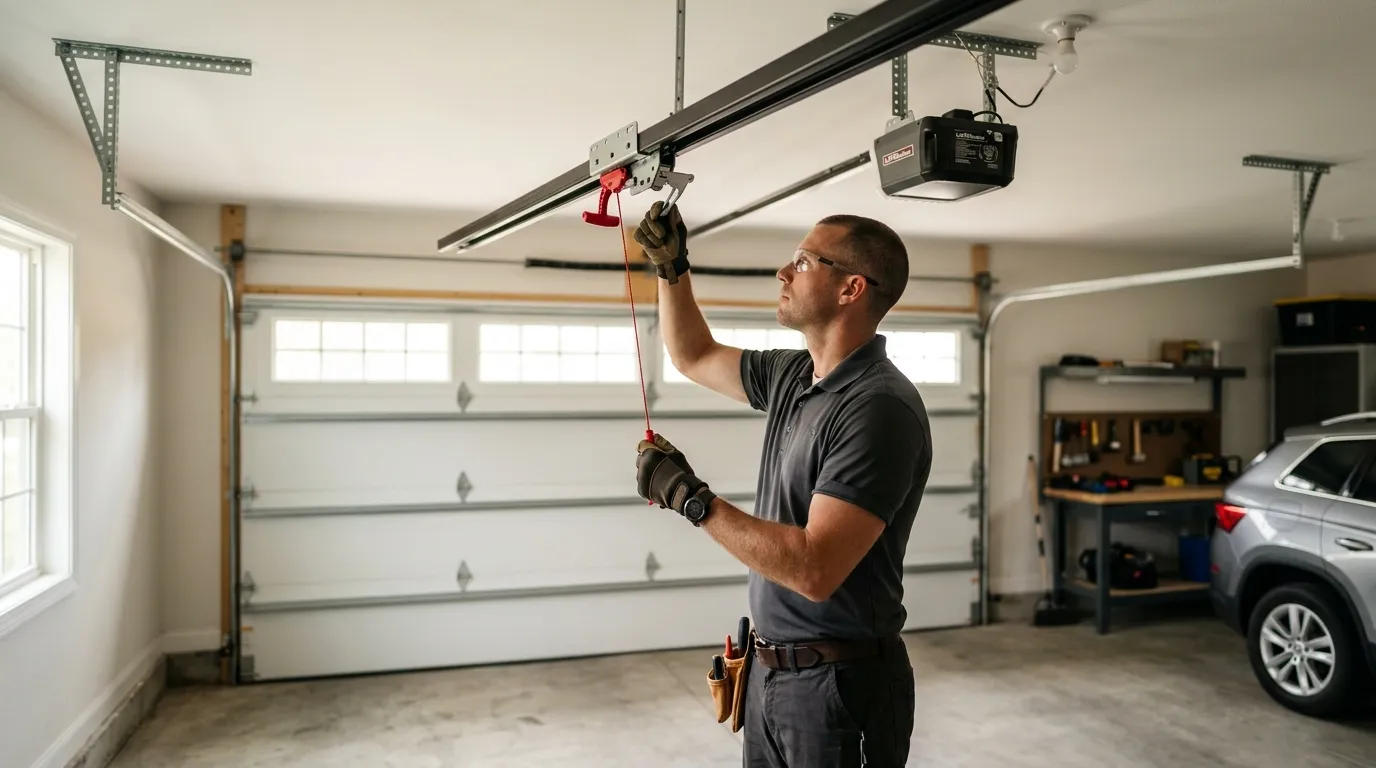
A torsion spring swap on a standard double door runs a couple hours once we're on site, longer if the drums or cable have to come off too. We travel from Fenton, five miles out, so getting to Holly doesn't add much to the day - it's not a same-day guarantee, just a short drive that doesn't strain the schedule the way a farther call would. Opener issues are usually quicker, springs are the job that takes the time because the door has to come down off tension safely before anything else gets touched.
DIY or pro
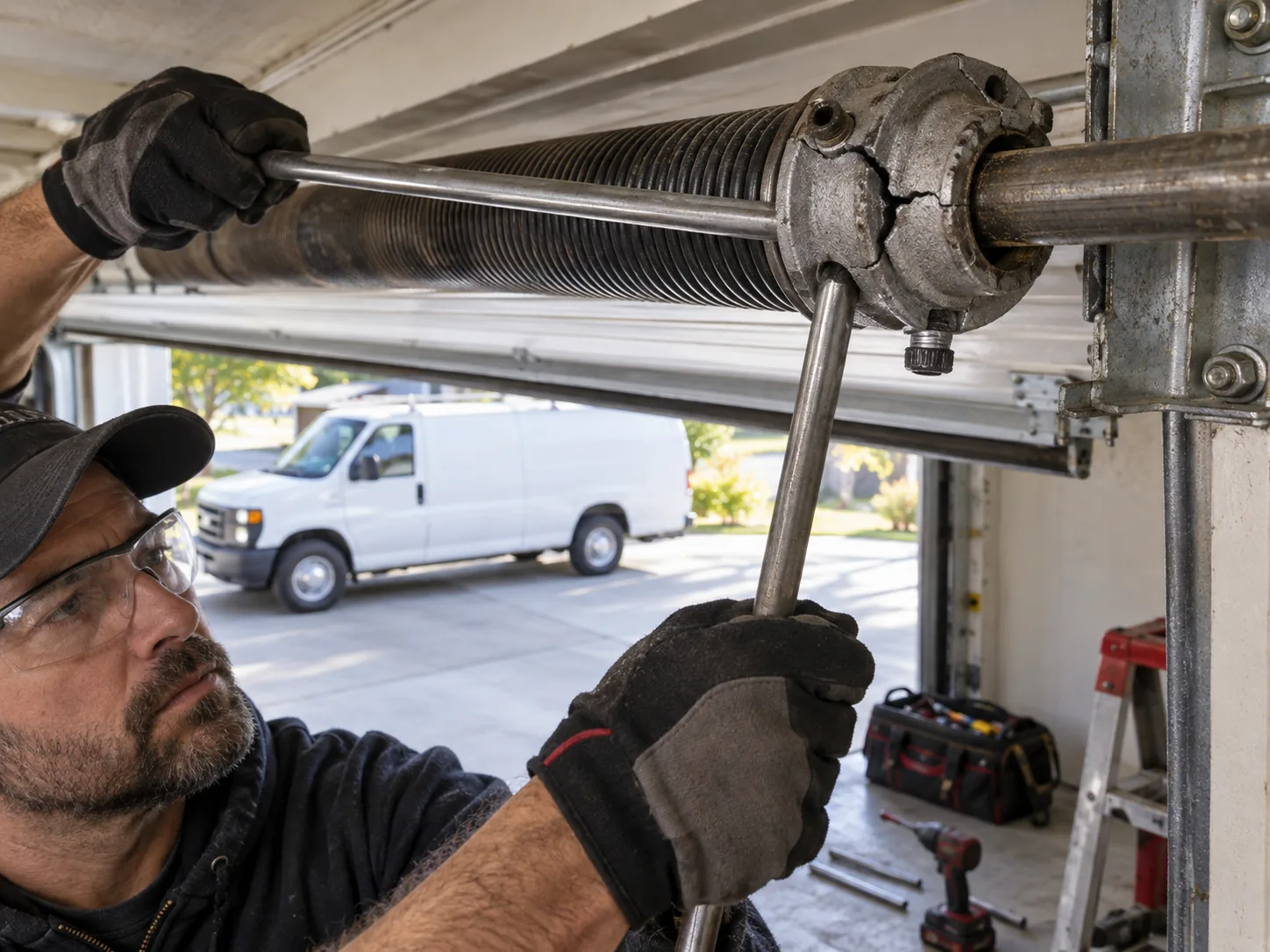
Don't touch a torsion spring yourself. It's wound under enough tension to break a wrist or worse, and the bar that holds it doesn't forgive a wrong tool.
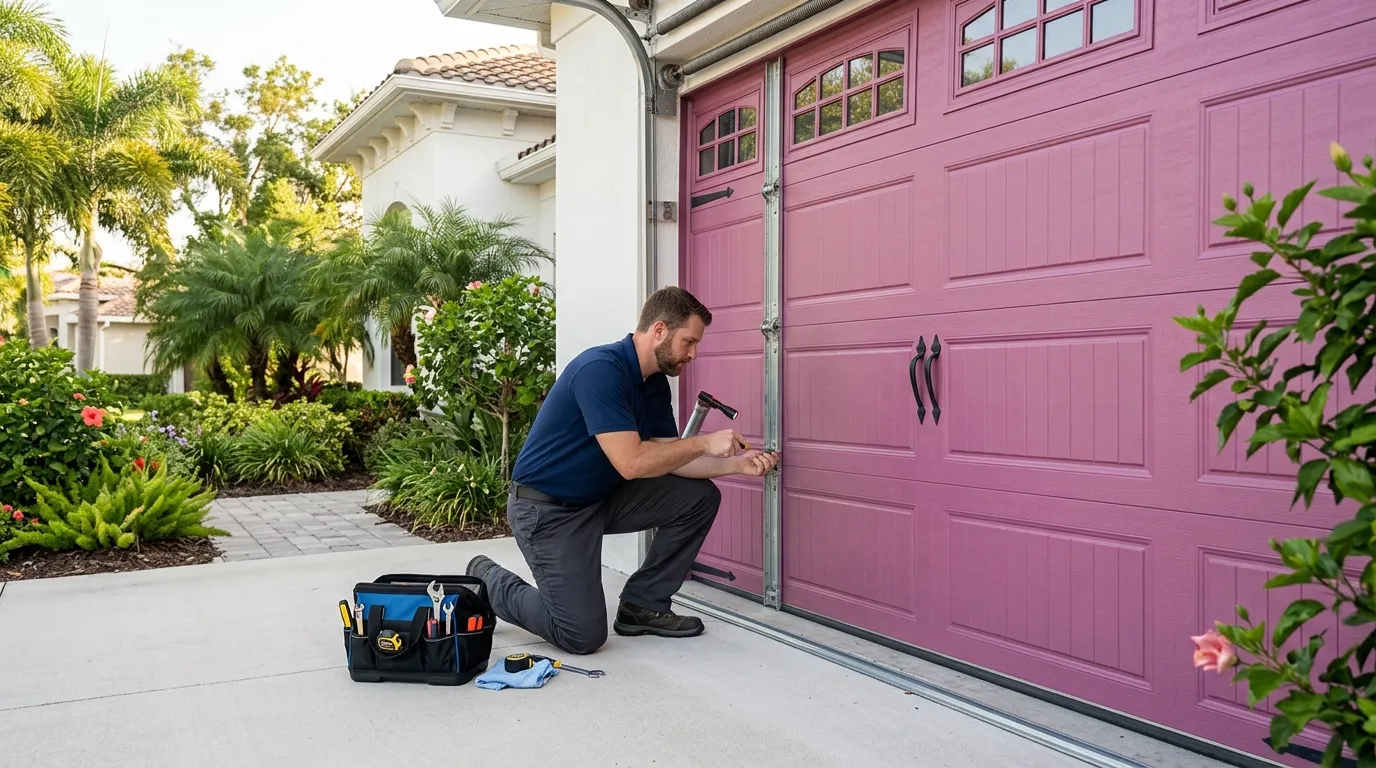
Rollers, a loose hinge, or lubricating a track - fine, that's homeowner work. Anything where the spring or the cable comes off the drum is a call, not a project.
If your Holly house still has its original 1981 hardware, the tension calculation on that spring may not match anything sold off a shelf today, which is one more reason to leave it to someone who's replaced enough of them to know the difference on sight.
On the truck
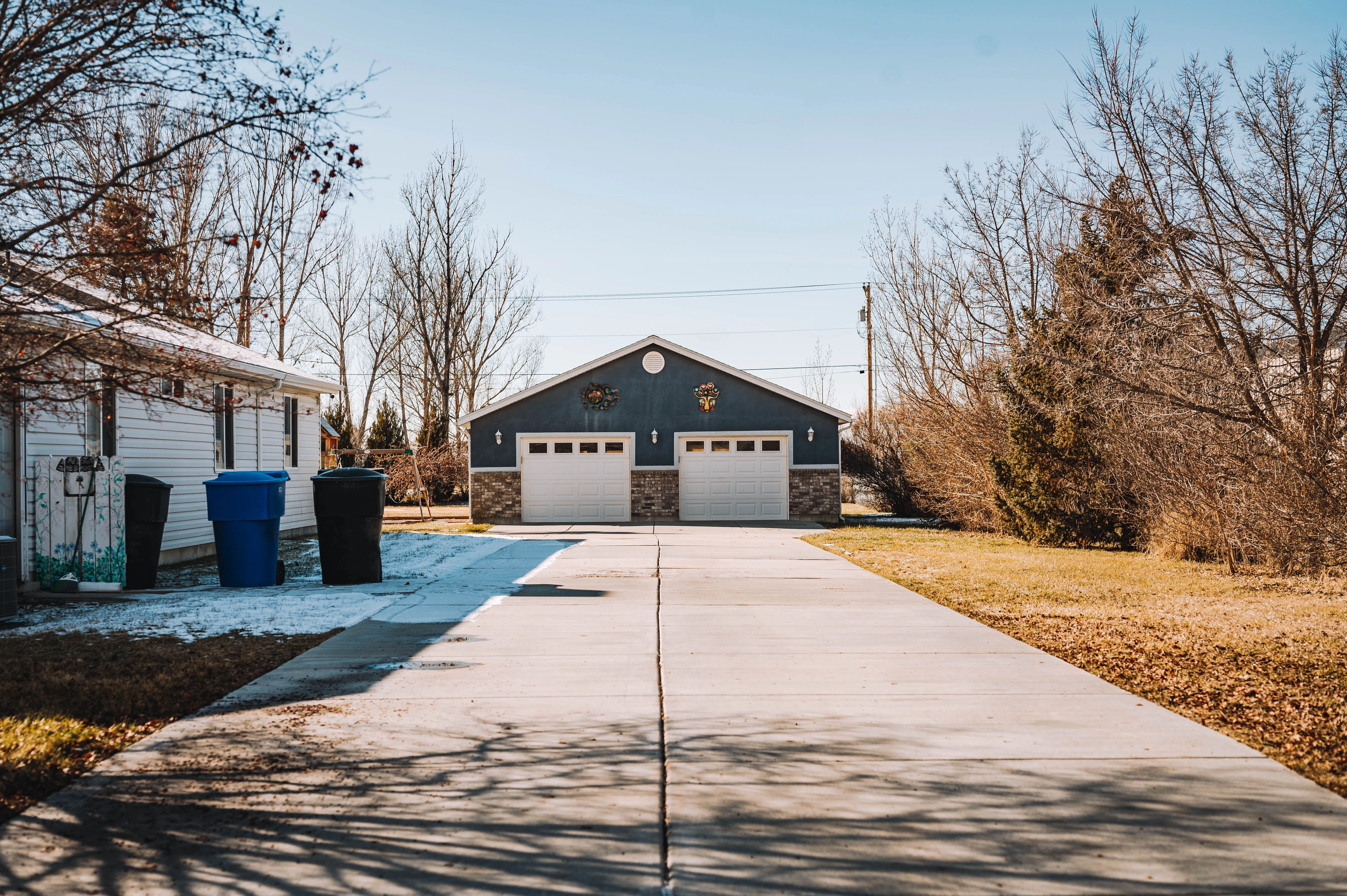
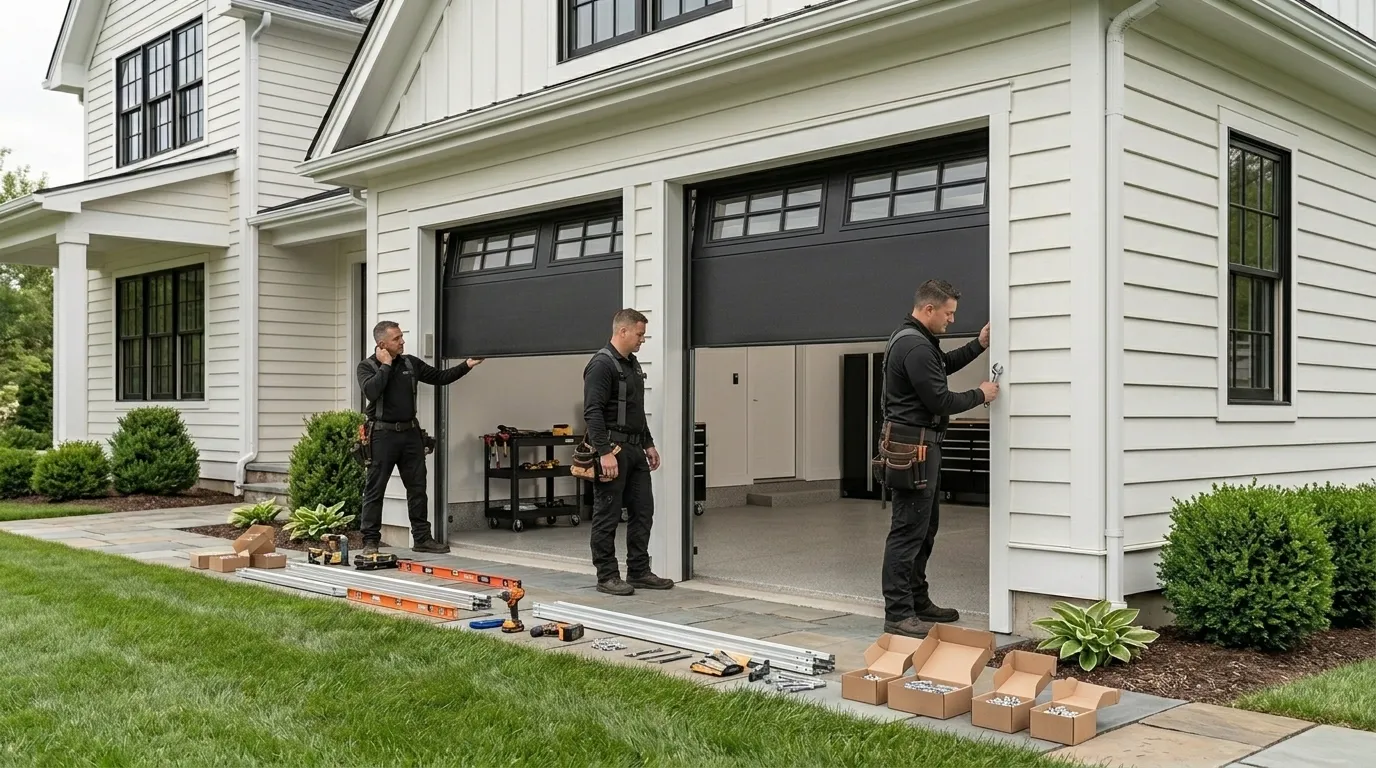
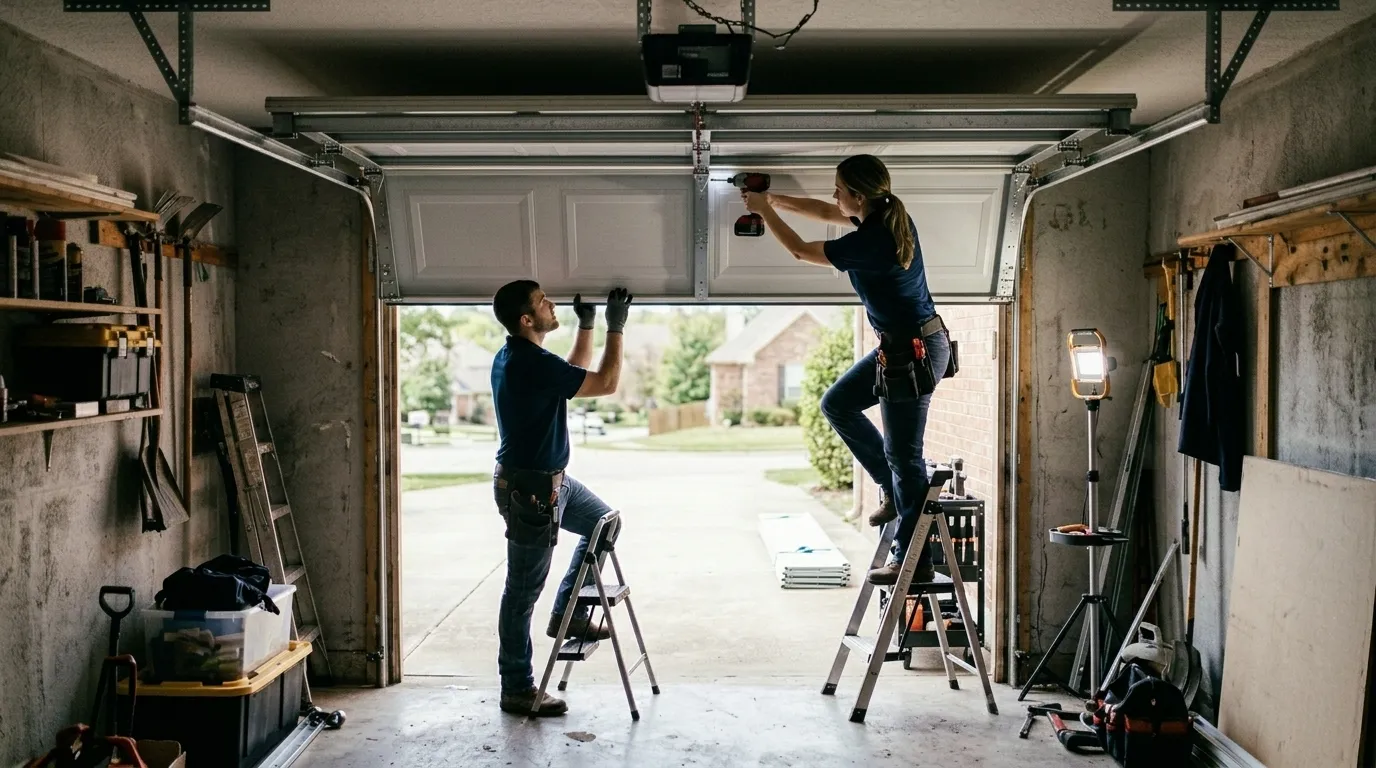
We stock the torsion springs and standard steel sections that fit the 1981-and-around housing stock common in Holly and the rest of the area - 8-by-7 and 16-by-7 sectional doors, standard-lift torsion hardware, and the openers that pair with them. What we don't keep on the truck is anything custom: a nonstandard width, a wood carriage-style door, or hardware from a build older than the 1970s stock nearby. Those get ordered, and the honest answer is that can add a few days versus a same-visit fix, depending on the part.
Local causes
The service area sits in a severe cold climate band, and that's hard on steel doors and torsion springs no matter what decade they're from.
Cold steel contracts, and a spring that's been cycling through Michigan winters since the door went in around 1981 loses temper faster than the same spring would in a mild climate.
Holly's homes, with a median household income of $61,221 against the wider area's $81,772, also tend to run their original hardware longer before replacing it outright - repair, not replacement, is usually the first call, and usually the right one for a door that's mechanically sound.
The repair
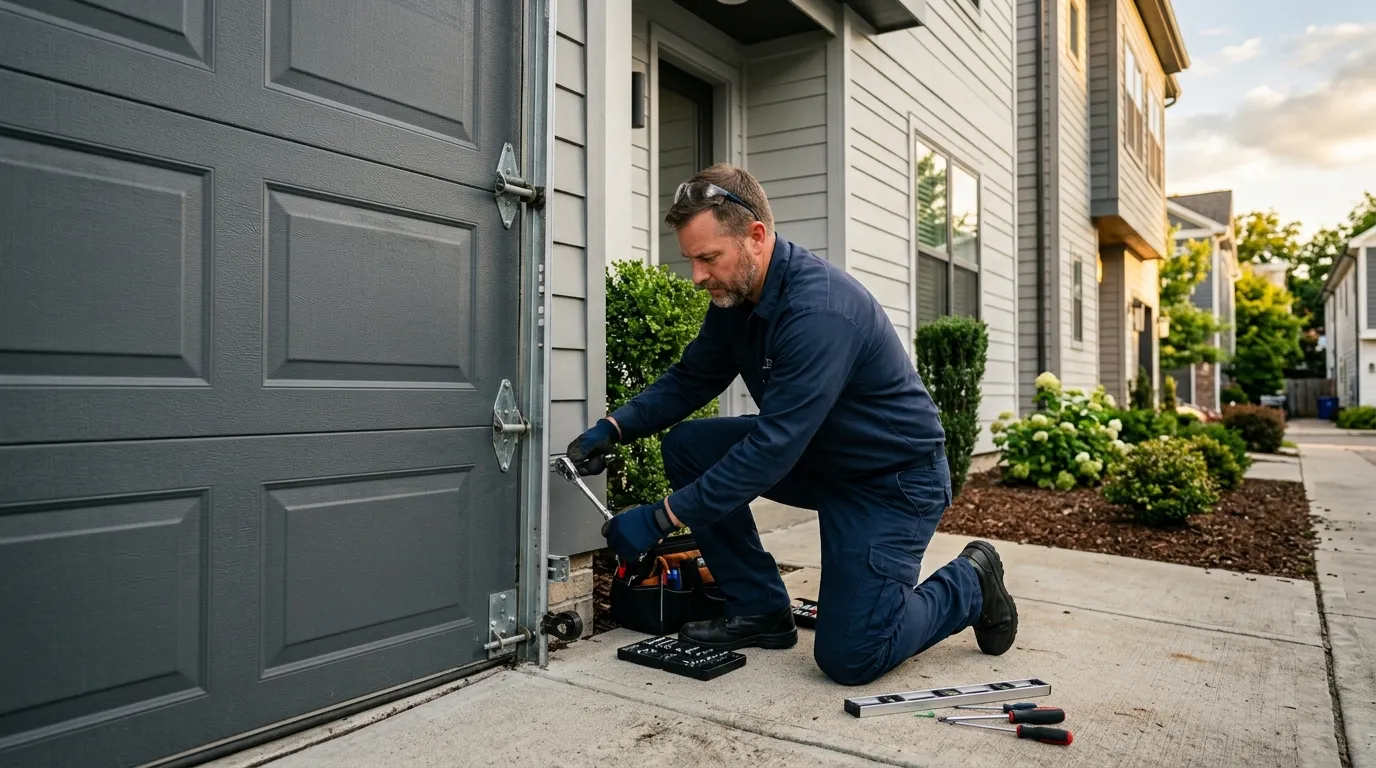
For a spring job: the door gets clamped down, the old spring comes off the center bracket, we match the new one to the door's weight and drum size, wind it to spec, and cycle the door a dozen times checking balance before we call it done. For a cable or roller repair, it's less involved - the drum comes down, the cable gets re-seated or replaced, rollers get swapped one at a time so the door never comes fully off track. On a 2,646-household area like Holly, most of what we see is this kind of mechanical repair rather than full door replacement, because the steel sections from that era hold up fine once the spring and hardware are sound again.
Questions
Most houses in Holly were built around 1981, so the original door is typically a steel sectional on torsion spring hardware from that era or a replacement installed sometime after. That's newer than a lot of the surrounding area, which trends closer to the 1970s, so the hardware and spring specs differ somewhat from house to house nearby.
No. We're based in Fenton, about five miles away, and travel out to Holly for calls. There's no separate branch or depot here - just the drive, which is short enough that it doesn't add much to scheduling.
The whole area sits in a severe cold climate band, and steel springs lose tension faster when they're cycling through cold Michigan winters year after year. A spring installed when the house was built in the early 1980s has usually gone through four decades of that cycling, which is why age and cold together, not one alone, are what wear it out.
Usually not, if the panels are straight and the track is square. Most of what fails on a 1981-era steel door is the spring, cable, or rollers, all repairable without touching the door itself. Replacement makes sense when the panels are dented through or the door's original width doesn't match anything still supported.
Explore more
Ready when you are
Fenton Garage Door Pros repairs and installs garage doors, springs and openers in Fenton, MI and the surrounding area.