
Guide
What an Older Fenton Garage Door Is Actually Worth Fixing
Fenton homes mostly date to 1950-1994. We explain what that means for your springs, panels, and opener, and when repair still makes sense versus replacement.
Local detail
The Problem
Most of the housing stock in the Fenton service area went up between 1950 and 1994, with the median landing around 1976. That's not trivia - it tells you what's bolted to your header. A door installed when your house was built in the 60s or 70s likely runs a single torsion spring sized for a lighter, thinner panel than anything sold today. Across the 21 named areas that make up this stock, that's the pattern we see over and over: original hardware, original track brackets, sometimes the original door itself repainted a few times.
The problem isn't that old parts are bad. Plenty of that 1970s steel is still sound. The problem is that the spring wear curve, the drum sizing, and the mounting hardware were all matched to a door and a house that don't exist in new construction anymore. When one piece fails - a cable frays, a spring gives out - it's rarely a simple swap. You're often chasing down hardware that isn't a stock size, or discovering the track was never plumb to begin with.
The area
What the Weather Here Does to It
Fenton sits in a cold-severe climate band. That matters for two reasons most people don't think about until something snaps. First, cold steel is brittle steel - a torsion spring that's been cycling for forty winters loses tensile life faster once temperatures drop, and it tends to let go on the coldest morning of the year, not a mild one. Second, older doors from the 1960s-70s stock weren't built with the foam-core insulation that's standard now. The panel itself flexes more in cold, which puts extra strain on hinges and the rollers riding in the track.
We don't have local weather-event data to point to specific storms or snow totals, so we won't guess at those. What we can say, tied to the climate band itself: cold makes old lubricant gum up, makes old springs fail without warning, and makes a marginal door feel a lot worse than it did in September. If your door's been dragging or groaning through fall, winter is when that becomes a call.
What we find
What Most People Get Wrong
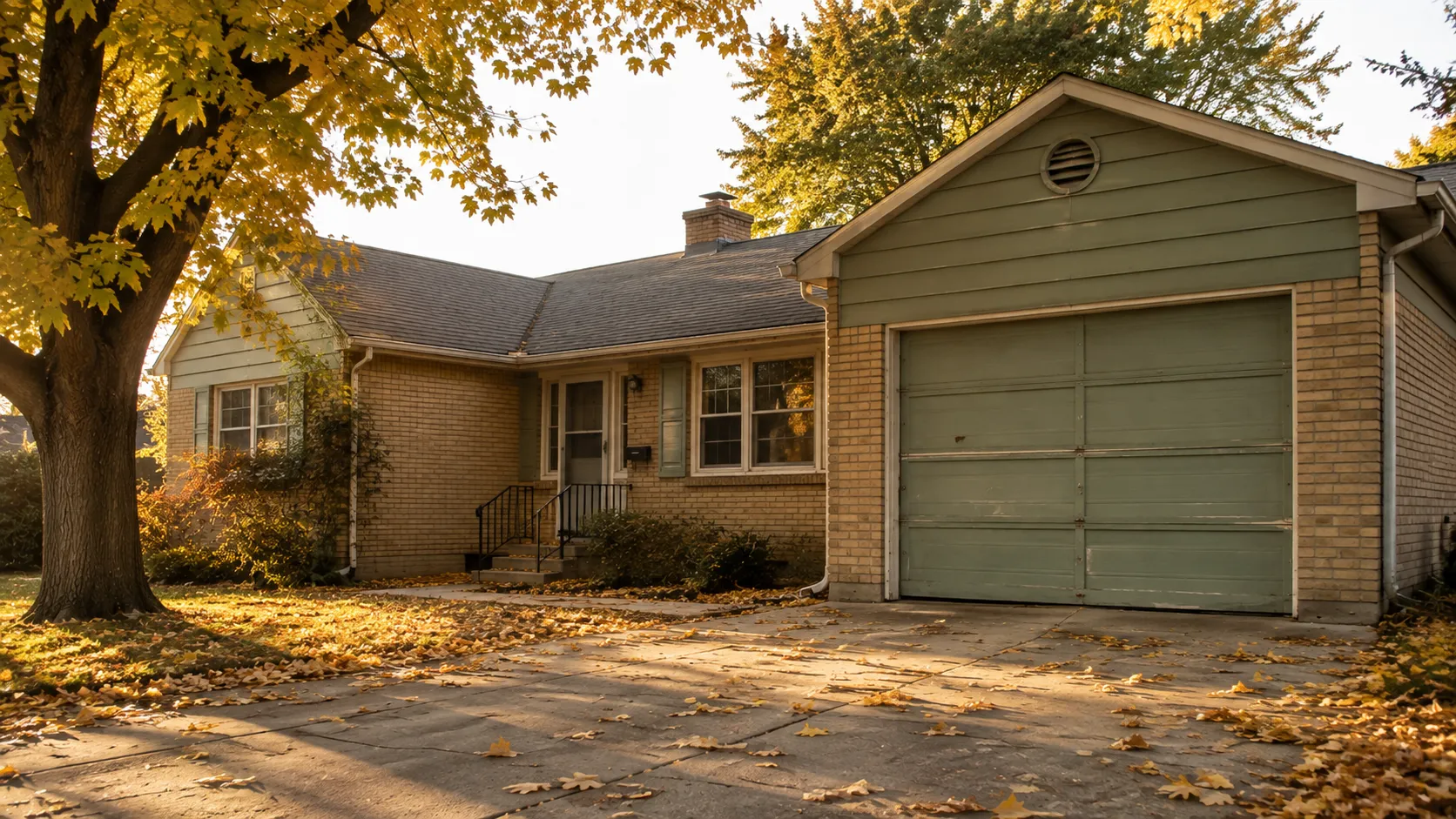
The most common mistake we see in houses from this era: someone replaces the opener - a straightforward, visible fix - and leaves the original torsion spring and cable system untouched, assuming that because the door still lifts, the hardware underneath is fine. An opener has to work harder than it should when the spring behind it is past its cycle life, and that shortens the opener's life too, not just the spring's.
The second mistake is assuming any new spring will fit. Torsion springs from the 1960s-70s stock were often sized to doors and drum combinations that aren't standard anymore. A universal-fit spring off a shelf can technically go on, but if it's mismatched to your door's weight, you'll get uneven lift, a door that drifts open or shut on its own, or a spring that wears out again in a fraction of the time it should. Getting the size right the first time matters more on an older door than a new one.
How we work
What It Costs
We're not going to hand you a number here, because what drives the cost on a door from this era isn't the labor - it's what's actually behind the wall. A door sized to match 1970s framing, with a torsion spring drum that doesn't match anything on the shelf, costs more to fix correctly than a same-year door with standard hardware, because the part has to be matched or fabricated rather than grabbed off a truck.
With 22,060 owner-occupied houses out of 39,635 households in this area, and a median household income of $81,772, most owners here can afford to replace a door outright if that's the right call - and sometimes it is. But plenty choose to keep fixing the original hardware, and that's a reasonable call too, as long as the fix is sized correctly rather than forced.
Here's the honest limit: if the jamb or header behind your track has rotted from decades of moisture, that's carpentry, not garage door work, and we'll tell you so rather than bolt new hardware to a soft frame.
Questions
Common questions
My house was built in the 1970s - is my spring a standard size?
Not necessarily. A lot of the 1960s-70s housing stock in this area used torsion springs and drums sized to doors that aren't common anymore. We measure before we quote, because a universal-fit spring that's close but not matched will wear out fast or lift the door unevenly.
Does cold weather actually break garage door springs?
Fenton sits in a cold-severe climate band, and cold steel loses flex over time faster than warm steel. A spring that's near the end of its cycle life is far more likely to snap on a cold morning than a mild one - it's usually the last straw, not the sole cause.
Should I replace the whole door or just fix what's broken?
Depends on what's actually failed and what else is close behind it. If the panels are original 1970s steel with no insulation and the spring's already gone, replacement often makes more sense than chasing parts. If it's one clean failure on an otherwise sound door, repair usually wins.
Do you work on the wood framing around the door?
No. If the jamb or header has rotted from years of moisture, that's carpentry work and outside what we do. We'll point it out plainly rather than mount new hardware to a frame that won't hold it.
Ready when you are
Need a garage door sorted in Fenton?
Fenton Garage Door Pros repairs and installs garage doors, springs and openers in Fenton, MI and the surrounding area.