
Guide
What That Grinding or Popping Sound Is Actually Telling You
In Fenton, homes built 1950-1994 are aging out of their original springs and openers. Here's what grinding, popping, or slamming noises actually mean.
Local detail
The Problem
Most of the doors we look at in Fenton aren't broken yet - they're just telling you they're close. Fenton's housing stock mostly went up between 1950 and 1994, with the median home dating to 1976, so a lot of these doors are running original torsion springs on hardware that's over 40 years old. That's not an insult to the house. It's just math: a spring rated for around 10,000 cycles has usually been through all of them by now, whether or not it's ever failed outright.
The sounds show up before the failure does. A rhythmic thump on the way up usually means a bent track or a roller that's worn its bearing out. A sharp bang, especially in a cold garage, is often a cable or a spring giving way - that one you stop using immediately. A grinding whine from the opener head is a stripped gear, not a spring problem at all, and fixing the wrong part wastes a trip. If your door's been quiet for 15 years and just started making noise this month, something changed - a part wore through, not a mood swing in the hardware.
The area
What the Weather Here Does to It
Fenton sits in a cold climate band with severe winters, and that's the part homeowners underestimate. Steel contracts in the cold, and torsion springs that were wound to a certain tension in a 70-degree garage in July are under different load in a 10-degree garage in January. That change in tension is where a lot of the popping and creaking comes from - the spring isn't broken, but it's working differently than it did six months ago.
Cold also thickens grease and lubricant on rollers and hinges, which turns a quiet roller into a squealing one until it warms up or gets re-lubed. And the freeze-thaw swings that come with a severe winter - a hard freeze followed by a 40-degree afternoon, then another freeze - flex wood jambs and steel panels in ways that loosen fasteners over a season. A door that rattles more in February than in August isn't imagining things. It's the same door, doing the same job, under a different set of physical conditions than it was built for.
What we find
What Most People Get Wrong
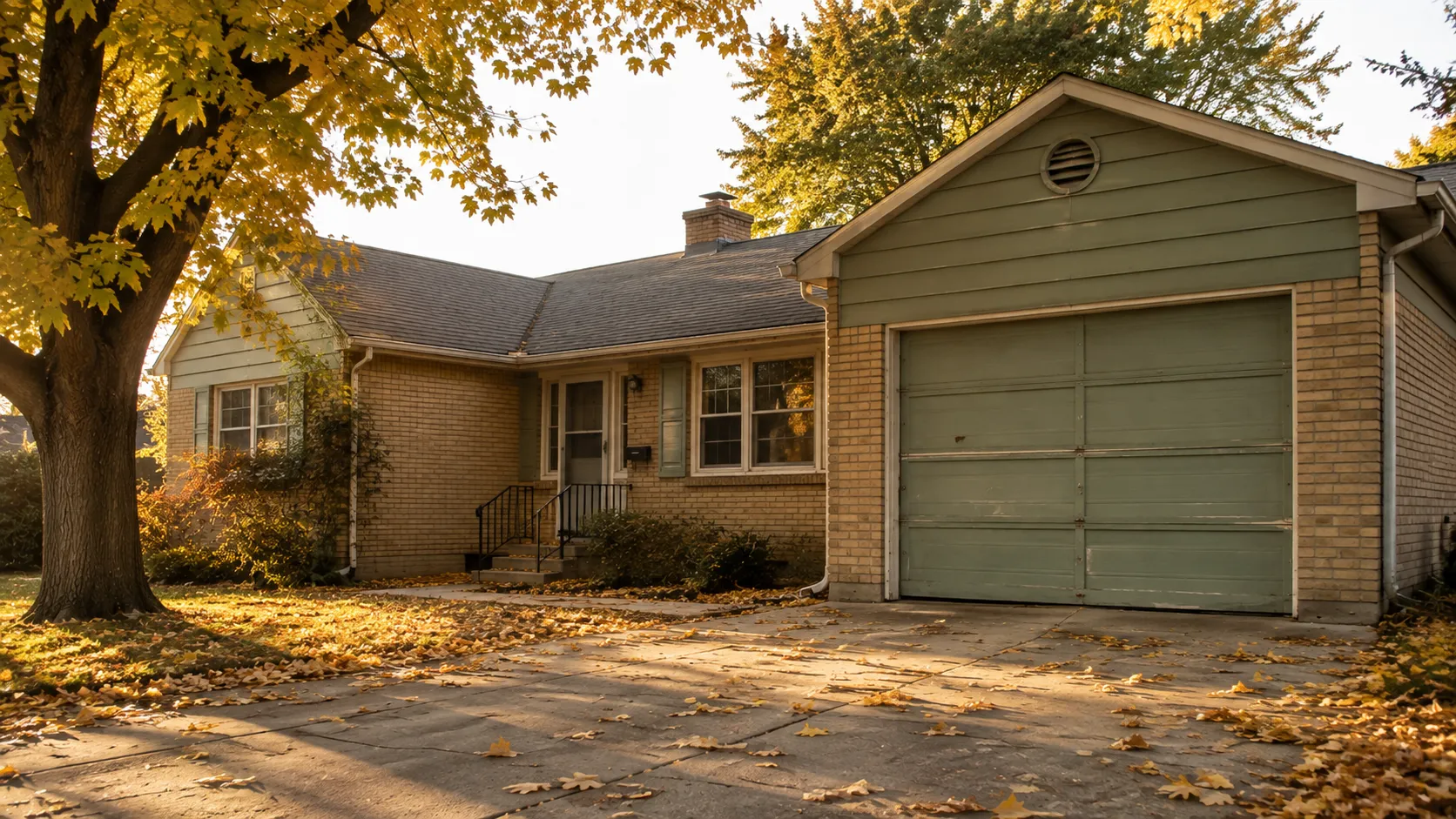
The most common mistake is treating every noise as an opener problem, because the opener is the part people can see moving. It's usually not. Given how much of the area's housing is 1960s and '70s construction, we still find a lot of original steel rollers and side-mounted torsion setups where the actual noise is coming from a 40-year-old roller riding in a track that was never designed for today's heavier insulated panels.
The second mistake is spraying WD-40 on everything and calling it maintenance. WD-40 is a solvent, not a lubricant - it strips old grease off the roller shaft and leaves it dry a week later, which is often when the squeak comes back louder. A light silicone or lithium-based lubricant on the hinges and roller stems does more, and it doesn't need to happen more than twice a year.
The third mistake, and the expensive one, is ignoring a grinding opener gear because the door still opens. It will keep opening right up until the gear strips completely, usually on a night when you need it to work.
How we work
What It Costs
We're not going to put a number here that doesn't mean anything until someone's looked at your door. A roller replacement and a stripped opener gear are not the same job, and neither is a full torsion spring swap on a double door versus a single. What we can tell you is what drives the cost: whether it's a lubrication and adjustment job, a parts swap, or a full spring replacement, and whether your opener's gear kit is still something a supplier stocks or something that has to be ordered in.
One honest limitation: on older openers, especially ones matching the age of a house built in the 1960s or '70s, the gear kit or circuit board sometimes isn't available anymore. At that point we'll tell you straight that replacing the opener costs less than chasing parts for one that's been discontinued, rather than stringing out a repair on a unit that's on its last legs anyway.
Questions
Common questions
My garage door bangs loudly when it closes in cold weather. Is that dangerous?
It can be. A loud bang, especially when temperatures drop, is often a cable slipping off its drum or a spring reaching the end of its life under changed tension. Stop using the door and don't put your hand near the springs. That's a call-someone noise, not a wait-and-see one.
Why does my opener grind but the door still opens fine?
That's usually a stripped or worn gear inside the opener head, not a problem with the door itself. It'll keep working until the gear fails completely, which tends to happen without warning. Worth having it checked before it strands the door open or shut.
How often should I lubricate an older garage door?
Twice a year is usually enough for hinges, rollers, and the torsion spring, using a silicone or lithium-based lubricant rather than a solvent spray. Given our winter swings, doing it once before the cold sets in and once in spring covers most of what the seasonal temperature changes do to the hardware.
Ready when you are
Need a garage door sorted in Fenton?
Fenton Garage Door Pros repairs and installs garage doors, springs and openers in Fenton, MI and the surrounding area.